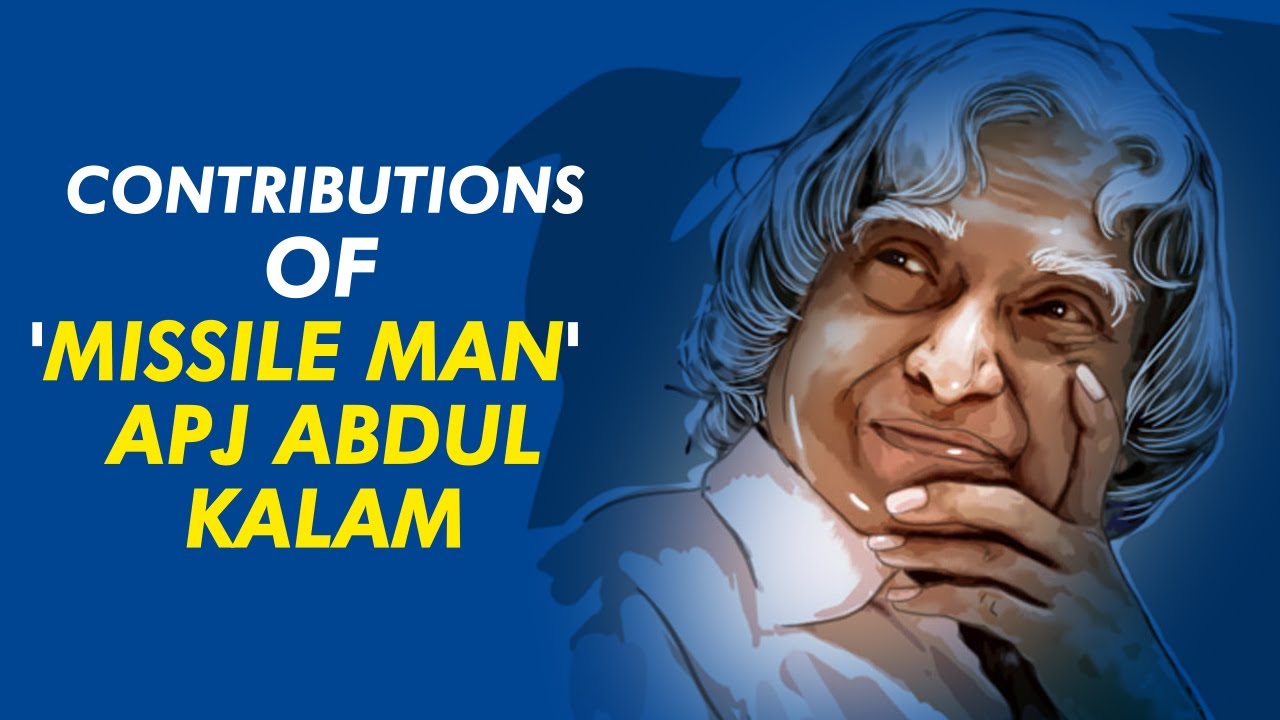
Here's a time line of Dr. APJ Abdul Kalam's life:
- 1931 - Born in pilgrimage centre of Rameswaram on Pamban Island
- 1954 - Kalam went on to attend Saint Joseph's College, Tiruchirappalli, then affiliated with the University of Madras, from where he graduated in physics.
- 1955 - He moved to Madras to study aerospace engineering in Madras Institute of Technology.
- 1960 - After graduating from the Madras Institute of Technology, Kalam joined the Aeronautical Development Establishment of the Defence Research and Development Organisation as a scientist after becoming a member of the Defence Research & Development Service (DRDS).
- 1969 - Kalam was transferred to the Indian Space Research Organisation (ISRO) where he was the project director of India's first Satellite Launch Vehicle (SLV-III) which successfully deployed the Rohini satellite in near-earth orbit in July 1980.
- 1965 - Kalam had first started work on an expandable rocket project independently at DRDO.
- 1969 - Kalam received the government's approval and expanded the programme to include more engineers.
- 1970s to 1990s - Kalam made an effort to develop the Polar Satellite Launch Vehicle (PSLV) and SLV-III projects, both of which proved to be successful.
- 1970 - Kalam also directed two projects, Project Devil and Project Valiant, which sought to develop ballistic missiles from the technology of the successful SLV programme.
- 1992 to 1999 - Kalam served as the Chief Scientific Adviser to the Prime Minister and Secretary of the Defence Research and Development Organisation.
- 1998 - Kalam along with cardiologist Soma Raju, Kalam developed a low cost coronary stent, named the "Kalam-Raju Stent".
- 2002 - He won the presidential election with an electoral vote of 922,884, surpassing the 107,366 votes won by Lakshmi Sahgal.
- 2002 - Kalam filed his nomination papers in the Indian Parliament, accompanied by Vajpayee and his senior Cabinet colleagues.
- 2007 - Kalam expressed his willingness to consider a second term in office provided there was certainty about his victory in the 2007 presidential election.
- 2012 - Kalam launched a programme for the youth of India called the What Can I Give Movement, with a central theme of defeating corruption.
- 2015 - dies at the age of 95.
"His invaluable contribution to India's rise in the sphere of science and technology would be remembered forever by all. He was a source of inspiration to the young generation of South Asia, someone who gave wings to their dreams"-- Prime minister of Bangladesh: Sheikh Hasina